
Date: March 4, 2026 | 8:00 PM EST / 7:00 PM CST
Duration: 1 Hour
Credits: 1
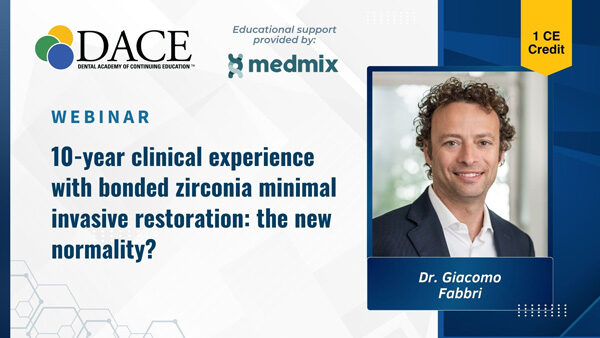
Presenter: Dr. Giacomo Fabbri
Sponsor: medmix
Cost: Free
The prosthetic treatment plan must allow ideal integration of esthetics, biologics, and functional requirements on natural teeth and on implants. Over the last 20 years, technology, new components, and new materials have revolutionized traditional approaches, steadily introducing new digital instruments year after year, such as CAD/CAM technology, guided implant surgery, and innovative digital tools for diagnosis, planning, and treatment. All these innovations have significantly influenced the clinical and technical workflow in both tooth-supported and implant-based rehabilitations.
Regarding tooth-supported prostheses, the key point is the minimally invasive prosthetic approach and its integration with a digital workflow. Minimally invasive prosthetic procedures can be performed not only in cases of full-mouth rehabilitation but also for simple crowns and bridges. In fact, today, with correct preparation techniques, it is possible to preserve sound tooth structure and, in many clinical situations, enamel as well. This approach, combined with adhesive bonding and the correct selection and use of restorative materials, allows excellent results in terms of integration and reliability of the final prosthetic outcome.
The evolution of restorative materials and approaches has made it possible to work with restorations of reduced thickness while maintaining sound tooth structure and preserving the integrity of the natural tooth. Nowadays, in cases of well-preserved teeth, with calibrated reduction and a specific clinical approach, it is possible to complete the preparation while maintaining more than 70% of enamel. The correct selection of restorative material is a crucial aspect, and monolithic zirconia represents one of the most interesting options, thanks to the possibility of using it at very reduced thicknesses, even in posterior segments. This aspect, combined with significant advancements in zirconia chemical adhesion, opens new perspectives in terms of restorative techniques and clinical options.
This lecture aims to describe a 10-year clinical experience with ultrathin bonded zirconia restorations placed in both anterior and posterior segments.
Learning Objectives
By the end of this session, participants will be able to:
- Identify the advantages of bonded zirconia compared to silica-based ceramics
- Recognize the clinical indications for bonded zirconia restorations
- Understand operative guidelines for predictable bonded zirconia outcomes
About the Presenter
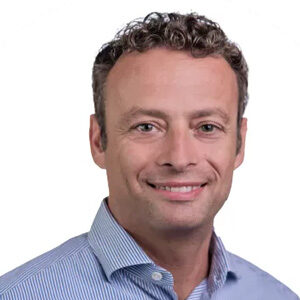
Dr. Giacomo Fabbri he graduated with honours in dentistry and dental prosthodontics at the University of Pavia in 2003. He attended several postgraduate programs in Italy and abroad in the fields of Prosthodontics, Periodontics, Implant Dentistry and Esthetic Dentistry. In 2012 he became an Active Member of the Italian Academy of Prosthetic Dentistry (A.I.O.P), a prestigious scientific Academy in the field of esthetic and prosthetic dentistry. He is an Active Member of the Italian Academy of Esthetic Dentistry. He has published several international articles in peer-reviewed journals and he lectures regularly in Italy and abroad on topics related to fixed prosthodontics and implant prosthodontics with specific interest on esthetics, new materials and modern minimally invasive approaches. He works in Ban-Mancini-Fabbri Specialist Dental Practice, located in Cattolica (Italy), in the field of esthetics and prosthetic rehabilitation on natural teeth and implants.
Supported in part through an unrestricted educational grant by:

Course Includes
- 1 Lesson
- Course Certificate
CE credit(s): 1
Course Type: Live Webinar
Published Date: March 4, 2026
This continuing education (CE) activity was developed by Endeavor Business Media with no commercial support.
This course was written for dentists, dental hygienists, and dental assistants, from novice to skilled.
Educational methods: This course is a self-instructional journal and web activity.
Provider disclosure: Endeavor Business Media neither has a leadership position nor a commercial interest in any products or services discussed or shared in this educational activity. No manufacturer or third party had any input in the development of the course content.
Requirements for successful completion: To obtain 1 CE credits for this educational activity, you must pay the required fee, review the material, complete the course evaluation, and obtain an exam score of 70% or higher.
CE planner disclosure: Laura Winfield, Endeavor Business Media dental group CE coordinator, neither has a leadership nor commercial interest with the products or services discussed in this educational activity. Ms. Winfield can be reached at lwinfield@endeavorb2b.com.
Educational disclaimer: Completing a single continuing education course does not provide enough information to result in the participant being an expert in the field related to the course topic. It is a combination of many educational courses and clinical experience that allows the participant to develop skills and expertise.
Image authenticity statement: The images in this educational activity have not been altered.
Scientific integrity statement: Information shared in this CE course is developed from clinical research and represents the most current information available from evidence-based dentistry.
Known benefits and limitations of the data: The information presented in this educational activity is derived from the data and information contained in the reference section.
Registration: The cost of this CE course is Free for 1 CE credits.
Cancellation and refund policy: Any participant who is not 100% satisfied with this course can request a full refund by contacting Endeavor Business Media in writing.
Provider information:
Endeavor Business Media is a nationally approved PACE program provider for FAGD/MAGD credit.
Approval does not imply acceptance by any regulatory authority or AGD endorsement.
11/1/2024 to 10/31/2028.
Provider ID# 320452
AGD code: 250
Endeavor Business Media is designated as an approved provider by the American Academy of Dental Hygiene, Inc. #AADHEBM (January 1, 2025 - December 31, 2026). Approval does not imply acceptance by a state or provincial Board of Dentistry. Licensee should maintain this document in the event of an audit. AADH code: AADHEBM-543-3-2026-1